
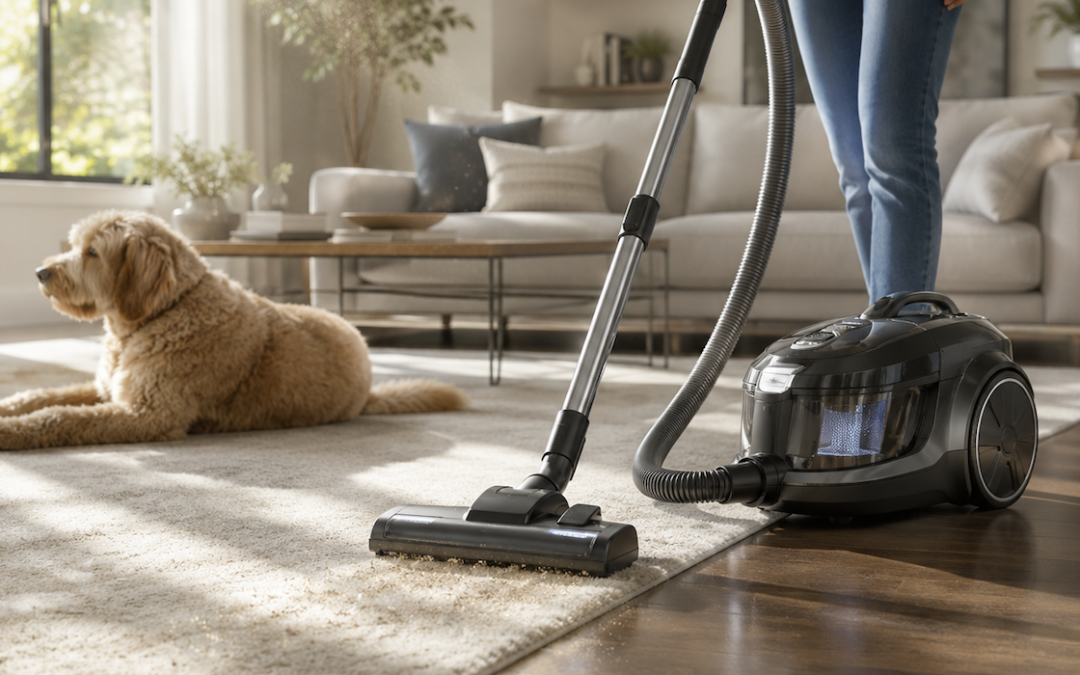
For families living across the Omaha metro area, maintaining a clean home environment is about much more than sweeping away visible dirt and surface clutter. In a region known for drastic seasonal weather swings, heavy pollen surges, and active household pets, indoor air quality plays a direct role in everyday health and comfort. If you or someone in your home struggles with sneezing fits, itchy eyes, or morning congestion, your home's flooring maintenance routine may be the hidden culprit.
While most homeowners rely on traditional upright or canister vacuums to manage dust, many are shocked to learn that their cleaning routine is actually worsening their indoor environment. Standard retail vacuums often pull coarse debris off the floor only to exhaust microscopic allergens, pet dander, and fine dust directly back into the air you breathe.
Finding a true allergy friendly vacuum cleaner in Omaha requires looking beyond basic suction power and understanding advanced filtration engineering. Whether you are dealing with seasonal ragweed, year-round pet hair, or sensitive respiratory conditions, upgrading to a specialized floor care system can completely transform your home's air quality.
Below, we explore the mechanical science behind zero-leakage vacuum technology, outline an actionable test to evaluate your current machine, and examine why whole-home central vacuums and sealed HEPA canisters represent the gold standard for healthy living.
The Unsealed Vacuum Trap: Why Most Vacuums Fail Allergy Sufferers
When evaluating how vacuums impact respiratory health, the fundamental flaw of most mass-market machines comes down to unsealed construction. A standard vacuum cleaner works by using a high-rpm motor to pull air, dirt, and air-borne particles off your carpet or hardwood floors. Once inside the machine, the air is pushed through a basic cloth or foam filter before being blasted out of the exhaust ports back into the room.
The critical issue is that microscopic particles—such as dust mite debris, mold spores, pollen grains, and pet dander—measure between 0.3 and 10 microns in size. To put that in perspective, a single human hair is approximately 70 microns thick. Basic foam or fabric filters found in cheap plastic vacuums are far too porous to trap particles this small.
Even worse, most plastic vacuum housings are not air-tight. As air pressure builds inside the vacuum body during operation, fine dust bypasses the filter entirely, escaping through tiny cracks, seams, and motor housings. Every time you push a standard unsealed vacuum across your floor, you are essentially operating a high-powered allergen disperser that pressurizes microscopic dust directly into your breathing zone.
Comparative System Workflows
- Unsealed Vacuum: Dirt In $\rightarrow$ Air forced through porous filter or housing seams $\rightarrow$ Fine dust and allergens blasted back into room air.
- Sealed HEPA System: Dirt In $\rightarrow$ Air forced through air-tight housing $\rightarrow$ 100% of air passes through certified HEPA filtration media.
- Central Vacuum System: Dirt In $\rightarrow$ Air drawn through in-wall PVC network $\rightarrow$ 100% of fine dust and exhaust expelled outside living spaces.
Actionable DIY Test: Is Your Vacuum Emitting Hidden Dust?
Most homeowners assume that if their vacuum isn't blowing visible clouds of grey dirt, it is working properly. However, microscopic particles are completely invisible to the naked eye under ambient room lighting. If you want to verify whether your current vacuum is leaking invisible contaminants back into your living space, perform this simple, actionable test at home.
The High-Intensity Beam Test
Tools Needed:
- A high-lumen LED flashlight or a focused smartphone light beam.
- Your current vacuum cleaner (with an empty bag or cleared dust bin).
Test Steps:
- Prepare a Darkened Room: Wait until evening or close all blinds, curtains, and doors in a small room (such as a bedroom or hallway) to make the space as dark as possible.
- Establish a Baseline: Turn on your high-intensity flashlight and hold it horizontally at chest height. Look closely at the beam of light. You may see a few isolated dust specks floating gently through the air—this represents your room's normal baseline environment.
- Start the Vacuum: Plug in your vacuum and turn it on, keeping the light beam focused across the vacuum's body, exhaust vents, and motor housing.
- Observe the Light Stream: Hold the flashlight beam directly above and behind the vacuum’s exhaust ports while running the machine across a rug or carpet section for 30 to 60 seconds.
How to Interpret the Results:
- Failed Test (Contaminants Present): If you observe a shimmering, dense "snowstorm" of tiny glittering particles swirling inside the light beam above the exhaust ports, your vacuum is failing. That shimmering effect is fine dust, pet dander, and fragmented allergens blowing directly through your machine's seams and filters.
- Passed Test (Air-Tight Filtration): In a truly sealed system, the light beam behind the exhaust port remains completely clear, showing no increase in floating particles compared to your baseline reading.
If your machine fails this test, relying on it to maintain a healthy living space will continue to trigger indoor allergies. Switching to a certified allergy friendly vacuum cleaner in Omaha is the single most effective step you can take to eliminate this hidden pollution source.
Understanding Filtration: Sealed HEPA vs. Exterior Central Vacuum Exhaust

When shopping for an upgraded system, the terminology can quickly become confusing. Many retail machines feature a bright sticker claiming they include a "HEPA Filter." However, having a HEPA filter inside an unsealed vacuum frame provides a false sense of security. If air can leak around the edges of the filter frame, the HEPA rating is virtually meaningless.
To achieve genuine relief, you need a system engineered around total air containment.
1. Sealed HEPA Filtration (Miele & Lindhaus)
A true sealed HEPA filtration vacuum in Omaha ensures that 100% of the air pulled into the machine is forced directly through certified filtration media without escaping through rubber gaskets or plastic housing joints.
Brands like Miele and Lindhaus set the global benchmark for sealed engineering. Miele's AirClean System, for example, combines multi-ply fleece dustbags, motor protection filters, and certified HEPA exhaust filters within a rubber-sealed casing. This guarantees that 99.95% of particles as small as 0.3 microns are permanently trapped inside the machine. When comparing Miele vs. standard vacuum filtration, the primary difference is complete structural containment—nothing escapes back into your home.
2. Exterior Exhaust Central Vacuum Systems
For the absolute ultimate in indoor environmental control, nothing surpasses a dedicated central vacuum. Considered by healthcare professionals as the premier asthma friendly central vacuum system, these built-in units eliminate the exhaust loop entirely from your living quarters.
Systems installed by brands like MD Manufacturing or Beam utilize smooth PVC piping hidden inside your walls, leading down to a high-capacity power unit located in your garage or basement. When you vacuum your living room or bedrooms, 100% of the pulled air, dust, pollen, and pet dander is carried completely out of the living space. The air is either filtered in a remote utility zone or exhausted directly outdoors. By removing the air displacement cycle from your living area, central vacuums keep fine floor dust completely undisturbed.
Finding the Best Vacuum for Allergies and Pet Dander in Your Omaha Home
Selecting the right vacuum system depends heavily on your specific floor plan, carpet density, pet situation, and personal physical preferences. What works for a single-story home with polished hardwoods may not be suitable for a multi-level residence with soft, plush carpeting and multiple pets.
Key Engineering Features to Look For:
Self-Sealing Dust Bags
Bagless vacuums have become popular in retail stores, but they present a massive hazard for allergy sufferers. Emptying a bagless dust cup into a trash can releases a swirling cloud of fine dust directly into your face and home. A proper allergy friendly vacuum cleaner in Omaha uses multi-ply, self-sealing dust bags that snap shut automatically when removed, locking dander and allergens away permanently.
Electric Agitator Powerheads
Pet hair and dust mite droppings bind tightly to carpet fibers through static electricity and physical weave. Pure suction alone cannot dislodge deeply embedded debris. You need an electrically driven brush roll with adjustable height settings to gently agitate carpet fibers, lifting trapped dander up into the airflow channel.
Dedicated Hard Floor Parquet Tools
Hardwood and tile floors require delicate natural-bristle brushes that glide smoothly without scratching finishes while capturing fine dust rather than pushing it around the room.
Active Charcoal Filters
If you own dogs or cats, pet dander carries persistent odors that can settle inside vacuum filters. Advanced systems feature active charcoal layers that absorb organic pet odors while trapping microscopic dander.
The Nautilus Vacuum Advantage: In-Home Air Quality & Vacuum Demos
Investing in a premium floor care system is an important decision for your home's health. Unfortunately, testing a vacuum on a polished concrete floor inside a crowded retail store or buying a mystery unit online offers no proof of how that machine will handle your specific carpets, hardwoods, or indoor air needs.
At Nautilus Vacuum, we believe you deserve total confidence before making an investment. Owned and operated by local floor care specialist Colin Watzke, Nautilus Vacuum offers a unique mobile service model across Omaha, Bellevue, Papillion, Elkhorn, Gretna, and surrounding communities.
Rather than making you drive across town or guess off a retail shelf, Colin brings the showroom directly to your front door in his fully equipped mobile service vehicle.
The Customer Journey
- Call Colin at (531) 495-7490: Discuss your specific flooring layout, household allergy needs, and pet challenges.
- In-Home Consultation: Colin arrives at your residence with a tailored selection of top-tier machines.
- Real Floor Testing: Test sealed canisters or explore central vacuum options directly on your carpets and hardwoods.
- Cleaner Indoor Air: Enjoy a certified zero-leakage floor care system matched to your home's exact footprint.
Why Choose Colin for Your Home's Floor Care?
- Personalized Flooring & Allergy Evaluation: Colin evaluates your home's unique layout, carpet types, pet challenges, and family health requirements to curate a selection of top-tier machines tailored specifically to your needs.
- Try Before You Buy: Test sealed HEPA canisters from Miele, heavy-duty uprights from Lindhaus, or explore retrofitting a whole-home asthma friendly central vacuum system on your actual floors.
- Mobile Pickup & Service: If your existing central vacuum or high-end portable unit requires a tune-up, filter replacement, or motor repair, Colin provides direct mobile pickup and on-site service to keep your equipment running at peak performance.
- 12+ Years of Passion & Expertise: Colin's lifelong passion for mechanical engineering and floor care means you receive honest, expert, and neighborly advice on every visit.
Frequently Asked Questions About Allergy & HEPA Vacuums in Omaha
Q: Is a sealed HEPA vacuum cleaner really necessary if I don't have pets?
A: Yes. Pet dander is only one of many common indoor allergens. Dust mite waste, pollen brought in on shoes, skin flakes, and microscopic outdoor pollution settle deep into carpets and furniture. A sealed HEPA filtration vacuum in Omaha ensures these microscopic particles are locked away rather than recirculated into your indoor air.
Q: Can a central vacuum system be installed in an existing Omaha home?
A: Absolutely. While central vacuums are easy to plan during new home construction, experienced technicians can expertly retrofit a complete system into most existing multi-level or ranch homes across Omaha. By running lightweight piping through attics, closets, or basements, wall inlets can be installed with minimal disruption to your home.
Q: How often should I replace the HEPA filter in my vacuum?
A: For optimal airflow and air quality protection, certified HEPA filters in sealed canister systems should generally be replaced once every 12 months, or after roughly 50 hours of active vacuuming. Self-sealing dust bags should be changed when they reach approximately 3/4 capacity to maintain full motor suction.
Take Control of Your Indoor Air Today
Don't let an outdated or unsealed vacuum compromise your family's health and comfort. If your current machine failed the flashlight test, or if you are ready to experience the deep-cleaning performance of a true allergy friendly vacuum cleaner in Omaha, expert help is just a phone call away.
Whether you want to explore the whisper-quiet performance of a sealed HEPA filtration vacuum in Omaha or schedule an assessment for a powerful whole-home central vacuum system, Colin Watzke is ready to bring expert guidance directly to your door.
Take the Next Step Toward Cleaner Air:
- 📞 Call or Text Colin Directly: (531) 495-7490
- 📝 Schedule an In-Home Demo: Visit Nautilus Vacuum to request your personalized, in-home vacuum demonstration.
- 🛠️ Mobile Repair & Tune-Ups: Need your current system serviced? Let Colin bring the mobile workshop to your driveway for fast, reliable repair.
Discover how easy floor care can be when premium equipment, technical expertise, and neighborly service are delivered right to your front door!